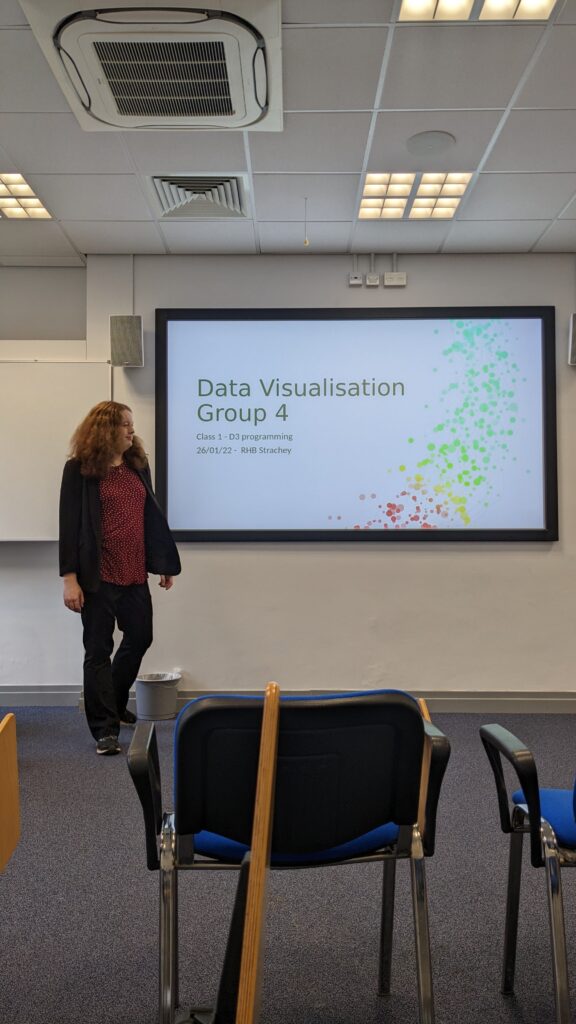
My research is in Biomedical Engineering and my teaching spans a range of science subjects; my recent teaching has focused on software engineering, system design, and data visualisation, this year I am teaching Biomechanics. I have taught: undergraduates from all years, masters students and 1st year DPhil researchers.
Most of my students are from subject areas similar to my own, although this year I taught on the Vice Chancellor’s Colloquium on Climate Change (VCC), an interdisciplinary program for students from all subject areas, so I had to adapt to teaching students from other disciplines who are familiar with different styles of teaching that I have not previously experienced. The VCC also gave me the opportunity to co-teach alongside a theologian, giving me new insights into the teaching approaches of other disciplines.
My teaching philosophy focuses on ensuring learning is accessible to all, to achieve this I use active learning techniques. As a learner, I find Active learning leads to stronger involvement in classes, better recall, and deeper engagement with concepts. Students have been shown to value participating in active learning [1] [2], Active learning has improved examination scores and decreased failure rates, This is true for all class sizes, but small classes benefit the most [3], making active learning particularly suited to Oxford’s modes of teaching. Active learning also inherently uses higher-level objectives under Bloom’s taxonomy [4] [5].
I use principles of universal design of learning to ensure that all students have the opportunity to fully engage in the lesson. In my first interaction with students, I encourage them to inform me if they have additional requirements to ensure that my teaching includes them. I also encourage students to feedback to me at any point if they do not find my teaching inclusive, so I can work to improve. I was pleased to see that my VCC students all felt that I made my teaching welcoming and inclusive (See Teaching Feedback), although I will continue to work to maintain/improve this level of Inclusion in my teaching.